Vinjec 500mg injection
In StockProduct Information
Product Name
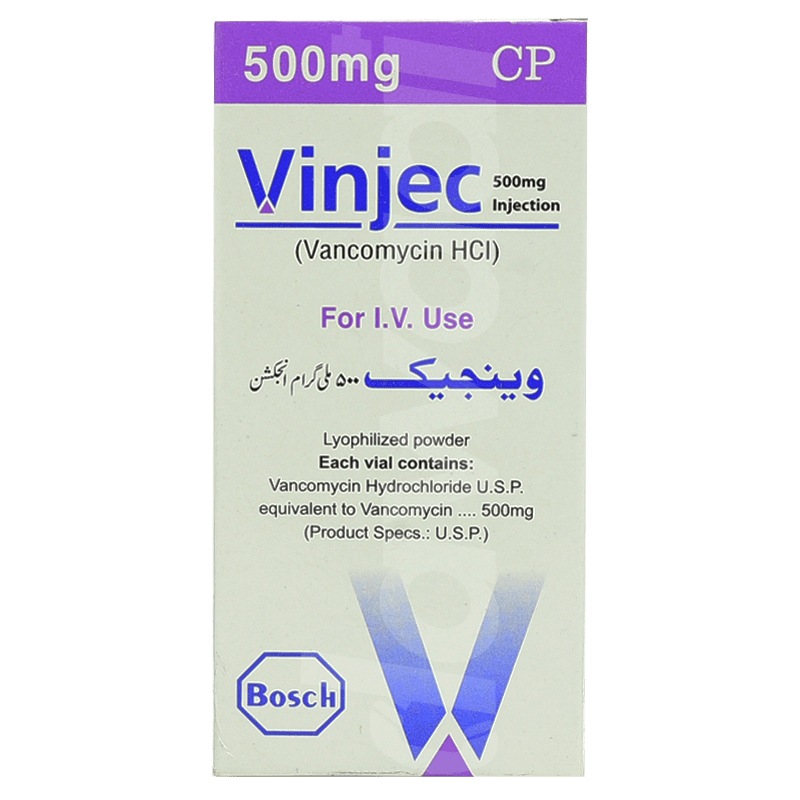
Vinjec 500mg injection
Product Description
Brand
Bosch
Prescription
Required
Uses
Bacterial infections, Other Anti-Infective Preps
Composition
Vinjec 500mg injection is composed of Vancomycin (500mg)
Pack Size
1 vial injection
Introduction
Vancomycin is a bactericidal antibiotic used alone or in conjunction with other medicines to treat infections of the colon, heart, blood, and bone. This medicine's rapid intravenous administration may reduce blood pressure. This antibiotic only addresses bacterial illnesses. It is ineffective against viral infections (like flu,
common cold).
How To Use
Vancomycin is often administered through vein injection as instructed by your doctor.
Each dosage should be administered gently over a period of at least one hour.
The duration and amount of your treatment are determined by your health condition, weight, and reaction to treatment.
If you are administering this Vancomycin
at home, make sure you understand all preparation and administration instructions from your doctor.
Expert Advice
If you're going to use Vancomycin at home, make sure you understand all of the preparations and dosage instructions from your doctor.
Before usage, visually inspect Vancomycin for particles or any
discoloration. If either of these conditions exists, avoid
using it.
Learn how to appropriately store and dispose off
medical supplies.
Keep Vancomycin out of children’s and pets’ reach.
Do not use Vancomycin after its expiry date has passed
Primary Uses
Bacterial infection
Indications
Endocarditis, an inflammation of heart's inner lining
caused by Staphylococcus
species and Streptococcus species, is treated with Vancomycin.
Vancomycin is used to treat bone infections , such as osteomyelitis caused by Streptococci and Staphylococci species.
Vancomycin is used to treat septicemia, a blood infection caused by Streptococci
pyogenes and Staphylococcus.
Infection of the Lower Respiratory Tract
Infection of the skin and soft tissue
Side Effects
Patients using this medication may at times experience drowsiness and impaired reactions. If you experience any of these symptoms for a long period of time, consult your doctor immediately.
Warnings
Pregnancy
Vancomycin
should only be used when absolutely necessary during pregnancy. Pregnant females should consult their
doctors
about the risks and advantages of Vancomycin .
Lactation
Vancomycin
is excreted in breast milk. Before breast-feeding, nursing mothers should consult
their doctors.
Driving
Vancomycin
may cause dizziness or drowsiness. Avoid
driving or
anything else that requires concentration until you are sure you can do it properly.
Liver
People having liver diseases should use Vancomycin
with caution. Consult your doctor before taking Vancomycin .
Kidney
People having kidney diseases should use Vancomycin
with caution. Consult your doctor before taking Vancomycin .
Alcohol
It is not suggested to drink alcohol while taking Vancomycin
since it can exacerbate adverse effects like
dizziness.
Precautions
Consult your doctor if you are hypersensitive to Vancomycin or if you have other Allergies/hypersensitivities
before taking it. Inactive components in this medicine may result in serious allergies
or other complications. For
more information, consult your doctor. Inform your doctor about your medical history, particularly if you have
renal difficulties, hearing problems, or intestinal/stomach
problems before using Vancomycin .
Vancomycin may impair the effectiveness of live bacterial vaccinations (such as typhoid vaccine). Before
receiving any vaccinations or immunizations, inform your doctor that you are taking vancomycin. Inform your
doctor or dentist about all of the products you consume before undergoing surgery (such as
all
prescription
and
nonprescription medicines, and herbal products). Children could be at higher increased risk of serious
infusion responses when Vancomycin
is injected too rapidly. While taking Vancomycin , older persons may be
more prone to renal and hearing problems.
Contraindications
Patients who have a known hypersensitivity to Vancomycin or any of the other inactive components in this medicine should not take it.
FAQS
In what conditions is this medicine advised?
It is advised in severe infections, specifically those involving heart, bones, and blood.
What happens on the abrupt withdrawal of the medicine?
This makes the infection more tolerant against the medicine and much harder to fight against in case of a relapse.
Can it be used as alternate to penicillin?
Yes, it can be, but only when a doctor advises so.
How long before vancomycin starts to show results?
Soon after the consumption, the medicine starts to work. But it may take few weeks before the entire condition is resolved, hence an abrupt withdrawal is strictly not advised.
Am I safe to continue with my daily activities while using this medicine?
Yes, you are.
Related Medicines