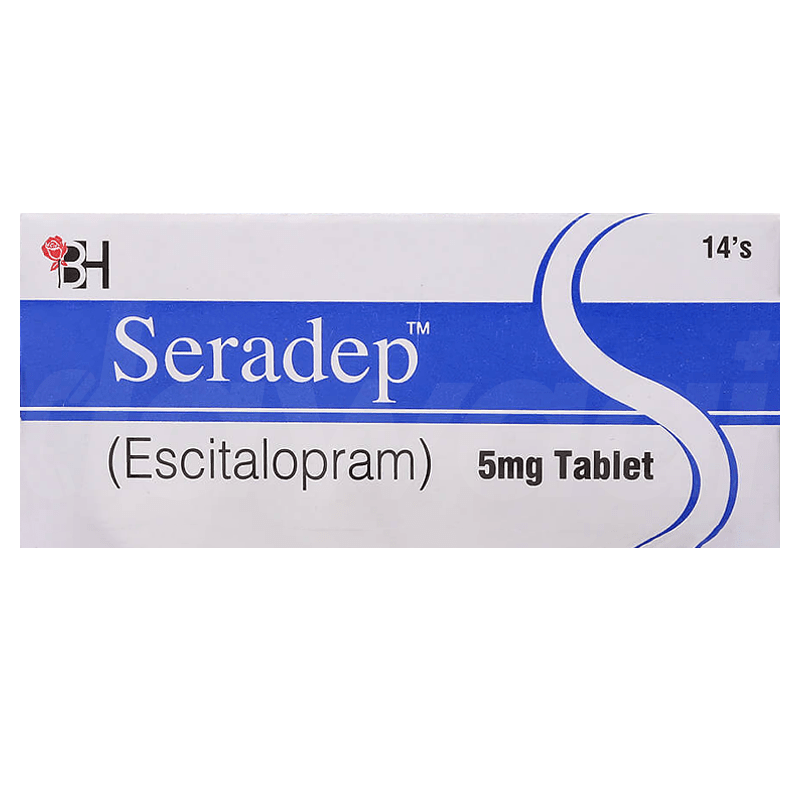
Seradep 5mg tablet
In StockProduct Information
Product Name
Seradep 5mg tablet
Product Description
Brand
Barrett
Prescription
Required
Uses
Depression, Antidepressant
Composition
Seradep 5mg tablet is composed of Escitalopram
Contains
7 tablet(s)/Strip
Pack Size
14 tablet
Introduction
Escitalopram is an SSRI (selective serotonin reuptake inhibitor) antidepressant medicine used to treat depression as well as generalized anxiety disorders, which cause prolonged and extreme worry regarding everyday events and situations. It functions by boosting the amount of serotonin in your brain, which aids in mental balance. It may boost your energy, make you feel better, and reduce your nervousness.
How To Use
Escitalopram should be taken either
with food
or without food as advised by your doctor, typically once a day in the morning or in the
evening.
The dosage is determined by your health condition,
treatment response,
laboratory tests, age
and any other medicines you are currently taking.
Take Escitalopram precisely as directed by your doctor.
Swallow the tablet with water.
Do not crush, chew or break the tablet.
Do not discontinue taking Escitalopram without first consulting your doctor.
Expert Advice
Take this medication with or without meals.
Avoid alcohol and caffeine while on this medication
Contact your doctor immediately if there is an allergic reaction to this medication or any of the side effects appear.
Do not stop taking this medication all of a sudden. Consult your doctor before leaving this medication suddenly.
Primary Uses
Depression
Indications
Depression, also known as major depressive disorder, is a very serious and
severe mental health illness that has a negative impact on how you think, feel, and act, leading to a loss of motivation and a chronic sad mood. Suicide attempts are possible as a result of this. Escitalopram is a medicine used to treat depression.
A generalized anxiety disorder is characterized by a persistent fear that interferes with daily life. Escitalopram is a medicine used to treat generalized anxiety disorder.
Side Effects
The side effects of this medication include sexual dysfunction, anxiety, tremor (shaking), myalgia (pain in muscles), arthralgia (pain in joints), weight gain, abnormal dreams, fatigue (tiredness), GI upset (stomach upset), sweating, nausea, drowsiness, insomnia (inability to sleep), dry mouth, fever, sinus infections, and dizziness.
Warnings
Pregnancy
Escitalopram
should be taken only when absolutely necessary during pregnancy. It has the potential to cause harm to
an unborn child. Furthermore, babies born to women who were using Escitalopram in
the last trimester
of pregnancy may experience symptoms of withdrawal
such as feeding difficulties, breathing difficulties
seizures, muscular rigidity, or continuous crying. Pregnant females are advised to consult their doctors regarding the benefits and risks of Escitalopram before using it.
Lactation
Escitalopram enters breast milk and can have adverse effects
on a nursing baby. Lactating females should consult their doctor before using Escitalopram.
Driving
Escitalopram use may impair one's ability to take decisions and react quickly in an emergency. As a result, you should exercise extreme caution when driving vehicles.
Liver
People with liver diseases should consult their doctors before using Escitalopram.
Kidney
People with kidney diseases should consult their doctors before using Escitalopram. Depending on their
condition, the doctor may change the dose of Escitalopram in kidney patients.
Alcohol
It is not suggested to drink alcohol while taking Escitalopram since it can exacerbate adverse effects like
dizziness and
concentrating difficulties.
Precautions
Inform your doctor if you are hypersensitive to Escitalopram or Escitalopram, or if you have other allergies.
Inactive components in this product may trigger allergy reactions or other complications. For more information,
consult your doctor.
Inform
your doctor
about your medical history, especially if you have a personal or family history of bipolar or
manic-depressive
disorder, a family or personal
history of attempting suicide, liver problems, seizures, low
blood
sodium, intestinal
bleeding/ulcers
(peptic ulcer) or bleeding disorders, and a family or personal
history of
glaucoma.
Escitalopram has been linked to a heart rhythm disorder (QT prolongation). QT prolongation can induce
dangerous (occasionally fatal)
irregular/fast
heartbeat as well as other symptoms (such as extreme dizziness
and fainting) that require immediate medical intervention. If you have specific medical problems or are using
other medicines that may induce QT prolongation, your risk of getting
QT prolongation may be increased. Before
taking Escitalopram, inform your doctor or pharmacist of all the medicines you are currently taking, as well as if
you suffer from any
of these
conditions: specific heart issues (heart failure, sluggish heartbeat, recent heart
attack,
prolongation o QT
in the EKG), a family history of specific heart conditions (prolongation of QT
in the EKG,
sudden cardiac death). Low magnesium and potassium levels in the blood may potentially raise your likelihood
of QT prolongation. This risk may rise if you are using certain medicines (such as diuretics) or have problems
such as excessive perspiration, diarrhea, or vomiting.
Consult your doctor about how to use Escitalopram safely. Inform your doctor or dentist about all of the
medicines you consume before undergoing surgery (including prescription, nonprescription and herbal
medicines).
Escitalopram
adverse effects, particularly bleeding, incoordination, and QT prolongation, may be more severe in
older persons. They could also be more prone to salt imbalances (hyponatremia), particularly if they are
simultaneously taking (diuretics). Falls can be exacerbated by a loss of coordination. Children are more sensitive
to the
negative effects of Escitalopram, including lack of hunger and weight loss. Children who are using this
medicine should have their
height and weight
measured.
Contraindications
Escitalopram is contraindicated in patients with hypersensitivity to Escitalopram or other components present in this medicine.
Monoamine oxidase inhibitors are a type of medicine used to treat depression. Escitalopram should not be used in conjunction with Monoamine Oxidase Inhibitors (MAOIs) since it increases
the danger
of serotonin syndrome (increased serotonin level in the body).
FAQS
What are the uses of Escitalopram?
This medication is used for the treatment of depression.
How to store Escitalopram?
Please store this medicine at room temperature (18-25 Celsius). Keep medicine away from excessive light, moisture, and children. Please do not flush medicines down the toilet. Please read the leaflet provided with the medicine for further storage guidance.
When should I contact my prescriber?
Contact your prescriber if there is severe headache, nightmares, lack of sleep, irritability, confusion and abdominal disturbances.
What is the dosage in adults?
The dosage in adults is 10mg once daily, increasing maximum to 20mg once daily if required.
Is it recommended in children?
No, this medication is not recommended in children.
Related Medicines