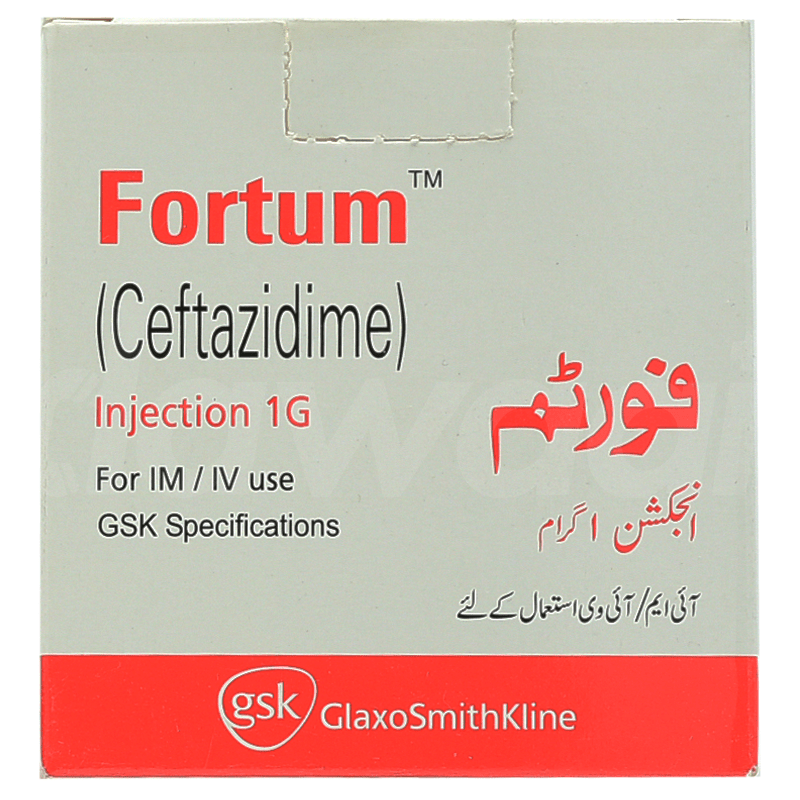
Fortum 1gm injection
In StockProduct Information
Product Name
Fortum 1gm injection
Product Description
Brand
GlaxoSmithKline
Composition
Fortum 1gm injection is composed of Ceftazidime (1gm)
Pack Size
1 Vial injection
Introduction
Ceftazidime is an injectable broad-spectrum third-generation cephalosporin beta-lactam antibiotic that treats or prevents bacterial infections such as pneumonia, septicemia, gynecologic infections, and
infections of joints and bone. It acts by either killing or inhibiting the growth of bacteria. This medication, however, does not help with flu, cold, or other viral infections.
How To Use
This medication is normally administered by injection into a
vein or muscle
every 8 to 12 hours, as instructed by your doctor. The dosage is determined by your symptoms
as well as your
treatment response.
If you want to use this medicine at home, make sure you understand all preparation and administration directions from your doctor.
Before usage, visually inspect this product for any
particles or discoloration. If either of these conditions exists, avoid using the
liquid.
Take this antibiotic at equally spaced intervals for the best results. Take this medication
each day at the same time(s)
to make it easier for you to remember.
Expert Advice
Although it is normal to feel well early on in therapy, the medicine should be administered exactly as prescribed. Missing doses or failing to complete the entire course of medication may decrease the efficacy of the immediate treatment; and
raise the probability that bacteria will acquire resistance and become untreatable in the future by Ceftazidime
or other antibacterial medicines.
Keep the medication out of the reach of children and pets.
Your healthcare practitioner will instruct you on how to properly keep your medication. Only keep your medication as instructed. Make sure
you learn how to properly keep your medication.
Indications
Severe infections, such as bacteremia, septicemia, peritonitis, and meningitis.
Infections in immunocompromised individuals.
Infections in patients in critical care, such as infected burns.
Infections of the respiratory system, particularly lung infections in cystic fibrosis.
Infections of the ears, nose, and throat.
Infections of the skin and soft tissues.
Infections of the urinary tract.
Infections of the gastrointestinal tract, biliary tract, and abdomen.
Infections of the joints and bones.
Infections related to hemodialysis, peritoneal dialysis, and continuous ambulatory peritoneal dialysis (CAPD).
Side Effects
This medicine may cause pain at injection site, allergy, stomach upset, candidiasis (oral or vaginal infection), disorders which decrease white blood cell types (neutropenia, leucopenia), increased liver enzymes and blood urea, positive coomb's test (test which detect antibodies against red blood cells). Please consult your doctor if you experience any of these symptoms.
Warnings
Pregnancy
Please consult your doctor before taking this medicine if you are pregnant.
Lactation
This medicine
excretes
into human milk in insignificant
amounts and is improbable to affect a nursing baby. Before taking this medication while
breast-feeding, check with your doctor.
Driving
Dizziness is one of the side effects of Ceftazidime that can impair your ability to drive. Do not drive or
unless you are certain you are not impacted.
Liver
There is no evidence that dose adjustment is required in mild - to - moderate liver disease, according to the available data. It is recommended that you visit your doctor before using this medication.
Kidney
In patients with kidney problems, the dose is reduced. It is recommended that you visit your doctor before using this medication.
Alcohol
There is no known interaction with alcohol. It is wise to see your doctor before consuming alcohol
Precautions
Inform your doctor or pharmacist if you are sensitive to Ceftazidime or any other antibiotics (such as penicillin or
other cephalosporins), or if you have other allergies.
Inactive chemicals in this product may cause hypersensitive reactions or other complications. For more
information, consult your pharmacist.
Before taking this drug, inform your doctor or pharmacist about your medical history, particularly if you have
kidney problems, stomach/intestinal disorders (including colitis), or bleeding disorders.
This medication has the potential to induce severe skin responses. They can occur weeks or even months after
beginning the medication.
If you have a complaint
fever or flu
with a rash, call your doctor right away. The rash may be purple or red
at first,
then develop into ulcers or skin peeling. You may also observe a red rash on your cheeks, lips, or lymph nodes in
your neck or beneath your arms.
Ceftazidime may impair the effectiveness of live bacterial vaccinations (such as typhoid vaccine). Unless your
doctor instructs you otherwise, do not undergo any immunizations or vaccines while taking this medicine.
Contraindications
If you have history of
a severe adverse response to Ceftazidime or any other cephalosporin antibiotic, it is better to
not use it.
FAQS
How long does it take for Ceftazidime to take effect?
The action of Ceftazidime begins soon after administration. After getting this injection, you should feel better in 3 to 5 days.
How long does Ceftazidime have an effect?
Ceftazidime has an estimated duration of action of 8-12 hours.
What should be done if a dose is missed?
Because Ceftazidime injection is provided by a skilled healthcare practitioner in a clinical or hospital setting, the possibility of a missed dosage is extremely low.
Is it a habit-forming substance?
Ceftazidime has not been reported to have any habit-forming properties.
Related Medicines