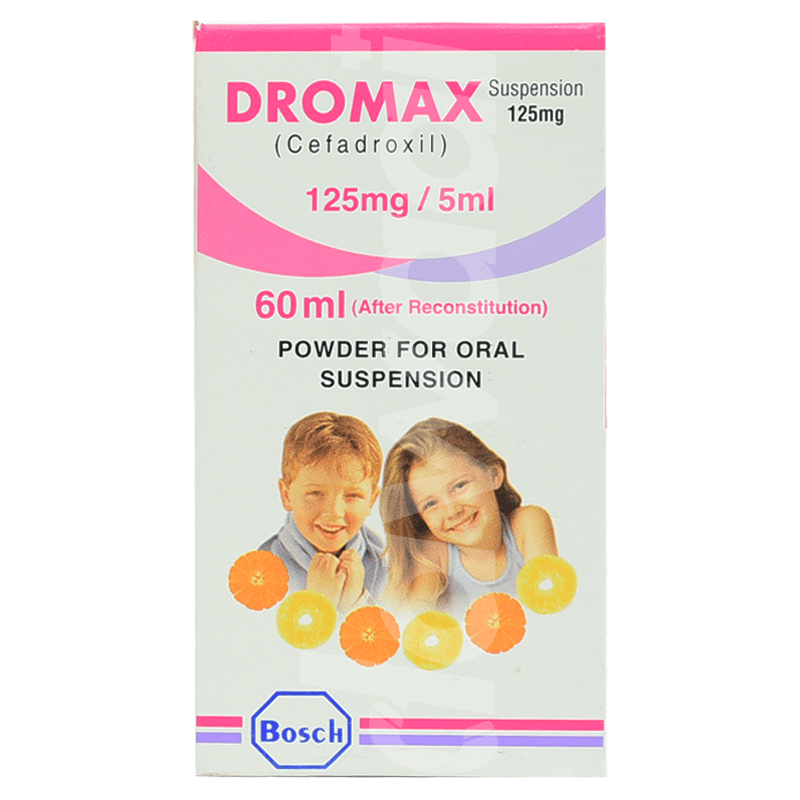
Dromax 125mg/5ml suspension
In StockProduct Information
Product Name
Dromax 125mg/5ml suspension
Product Description
Brand
Bosch
Class
Cephalosporin
Composition
Dromax 125mg/5ml suspension is composed of Cefadroxil (125mg)
Pack Size
60ml suspension
Introduction
Cefadroxil is a medicine that treats bacterial infections in different body parts. It falls in the cephalosporin antibiotics class of medicines. It works by either killing or stopping bacteria from growing. This medicine, however, does not help with flu, colds, or any other viral infection.
How To Use
Cefadroxil can be orally either with meal or without meal, everyday at the same time for the indicated duration.
The tablet should not be crushed, chewed, or broken. It should be swallowed with water.
If you forget to take
a dose, it can be taken soon as possible, but if the time of next dose is approaching, skip the missing dose.
Do not combine two dosages at once.
Expert Advice
Contact prescriber if there is pain on urination, vaginal drainage or itching, mouth sores, bloody stool or urine, fever, nausea, abdominal pain, or furry tongue.
Watery or bloody stools can occur two months after start of treatment and can be serious, requiring immediate treatment.
Indications
This medicine is used in respiratory tract (airway) infections, urinary tract infections, and skin infections.
Side Effects
Patients using this medicine may experience hypersensitivity reactions (overreactions of immune system), GI (stomach) disturbances, Pseudomembranous colitis (inflammation of colon), and hemolytic anemia (premature rupture of RBCs).
Warnings
Pregnancy
It is unclear whether or not Cefadroxil
is safe to be used by
pregnant women. This medicine should only be taken in pregnancy if absolutely necessary. Before using Cefadroxil during pregnancy, talk to your doctor to get a better understanding of the risks and advantages.
Lactation
Cefadroxil is released in a clinically insignificant level in breast milk. Before usage, talk to your doctor to get a better understanding of the risks and benefits.
Driving
Cefadroxil has the potential to make you feel
confused and affect your state of consciousness. As a result, driving while using Cefadroxil is dangerous.
Liver
Before taking Cefadroxil, patients suffering from
liver problems should see their doctor.
Kidney
In individuals with renal diseases, caution is advised; dosage should be modified as per the severity of renal disease.
Alcohol
While taking Cefadroxil, you should avoid or limit consuming alcohol.
Precautions
Before using this medicine patients must inform their doctor about their medical history, especially of: renal (kidney) impairment, hypersensitivity to penicillin, GI (stomach) disturbances, allergies, and asthma (breathing problem).
FAQS
What does this medicine do?
It is used against the treatment of bacterial infections. It does so by killing the bacteria and hence relieving the symptoms.
What happens on the abrupt withdrawal of the medicine?
This makes the bacteria resistant against the medicine and difficult to combat in case of a relapse.
What conditions require immediate withdrawal of the medicine?
Allergic reactions like rash, difficulty breathing and swellings qualify for immediate withdrawal. Inform your doctor if this happens.
Does it cause stomach upset?
Diarrhea and nausea are usually complained by the patients. Ensure to take this medicine with your meal to avoid this from happening.
What should be done in case the medicine fails to work?
Inform your doctor immediately about this, an alternate medicine might be advised
Related Medicines