Diclorep 50 mg tablet
In StockProduct Information
Product Name
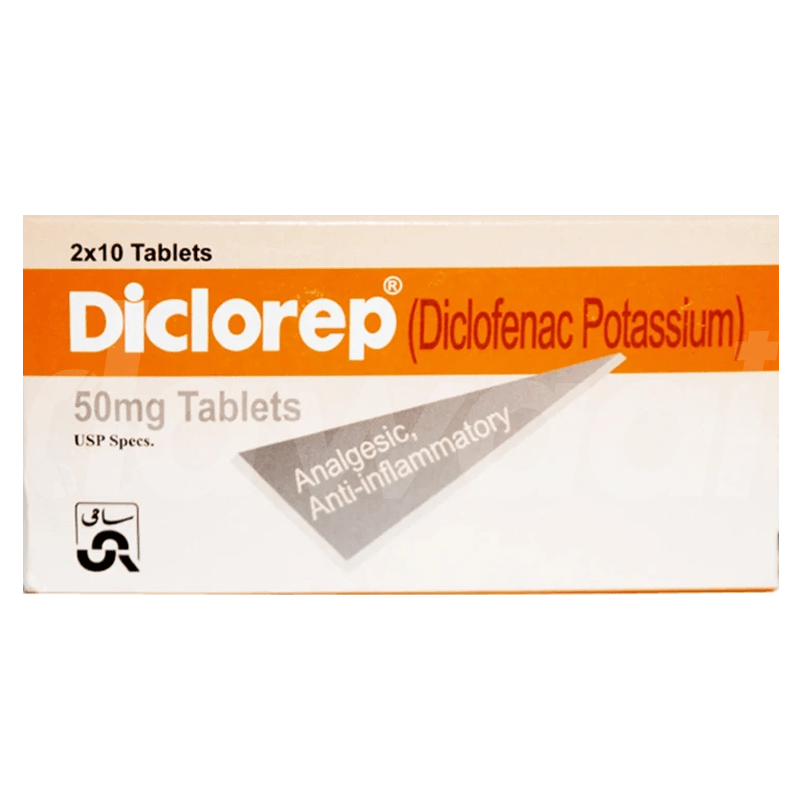
Diclorep 50 mg tablet
Product Description
Brand
Sami
Uses
Anti-rheumatic, Systemic
Composition
Diclorep 50 mg tablet is composed of Diclofenac potassium (50mg)
Contains
10 tablet(s)/Strip
Pack Size
2 x 10's tablet
Introduction
Diclofenac Potassium is a medicine that is used to treat swelling and pain (inflammation) caused by a variety of mild to moderate painful disorders. Muscle pains, backaches, tooth ache, menstruation cramps, as well as sports injuries are all treated with Diclofenac Potassium. It also relieves arthritis-related pain, edema, and joint stiffness. Lowering these symptoms allows you to participate in more of your daily activities. Diclofenac Potassium
is referred to as a nonsteroidal anti-inflammatory drug (NSAID).
How To Use
Follow your doctor's directions for taking Diclofenac Potassium.
Swallow the tablet with water.
Do not crush, chew, or break the tablet; instead, swallow it whole.
Take this drug with meals, milk, or an antacid to avoid stomach distress.
Expert Advice
Take with meals to reduce discomfort.
Avoid alcohol.
Do not crush, chew or dissolve tablet.
Take sufficient amount of fluids to avoid dehydration
Indications
Rheumatoid arthritis
Osteoarthrosis
Lower
backache
Migraine headaches
periarthritis (particularly frozen shoulder), tenosynovitis( inflammation of synovial sheath around tendon), tendinitis( inflammation of tendons), bursitis (inflammation of bursa) strains,
strains
and dislocations;
Ankylosing spondylitis.
Acute Gout (very painful arthritis)
Pain and inflammation management in dental,
orthopedic,
and other minor surgery.
Pyrophosphate arthropathy (A type of arthritis, caused by calcium pyrophosphate dihydrate accumulation) and its complications.
Side Effects
Nausea
Indigestion
Diarrhea
Constipation
Flatulence
Headache
Sleepiness
Dizziness
Warnings
Pregnancy
It is advised that pregnant females should consult their doctor before taking this medication.
Lactation
Diclofenac Potassium
is excreted in breast milk. Although
no incidents of risk to nursing infants have been reported, lactating females
should consult their doctors before taking this medicine.
Driving
While taking Diclofenac Potassium, avoid driving or
engaging
in any other activity that requires attentiveness until you are confident that you can do so safely.
Liver
Since hepatic (liver) metabolism is
responsible for nearly all of Diclofenac Potassium tablet clearance, patients with liver impairment may require lower Diclofenac Potassium tablet doses than those with good hepatic function. Patients with liver diseases should consult their doctors before taking this medicine.
Kidney
In individuals with severe kidney disease, Diclofenac Potassium should be avoided unless the advantages are predicted to surpass the risk of decreasing renal function. Patients with Kidney diseases should consult their doctors before taking this medicine.
Alcohol
Alcohol should not be consumed when taking Diclofenac Potassium. Diclofenac Potassium induced gastrointestinal bleeding can be exacerbated by alcohol.
Precautions
Caution is advised while using this medication if you are a patient with kidney, liver, and heart disease or gastric disturbances. Not to be used by patients with porphyrias or in volume depletion cases. In elderly people and patients getting long-term therapy the Liver functions tests and blood tests must be regularly monitored.
Contraindications
Allergy
to the active ingredient or any of the additives present in Diclofenac Potassium.
An active, stomach or intestinal ulceration, bleeding, or perforation.
Any past NSAID therapy-related gastrointestinal bleeding or perforation.
Active peptic ulcer / bleeding, or a history of repeated peptic ulcer / bleeding
Pregnancy's third trimester
Liver impairment
Failure of the kidneys
Congestive heart failure
FAQS
What is this medication and how does it work?
It is a Non-steroidal Anti-inflammatory Drug (NSAID) that works by blocking prostaglandin that causes inflammation hence reduces pain and stiffness in the joint.
Can I use this medication if I have a heart disease?
Studies show that this carries an increased risk of stroke or heart attack. It should therefore, not be given in people who have heart disease or related risk factors. Inform your doctor about it and he will guide you accordingly.
Can the use of this medicine cause excessive bleeding in tooth extraction?
Yes, it can affect platelets therefore it may prolong bleeding. Consult your doctor to stop the drug before any dental procedure.
Can I use this medication with my anti-hypertensive medication?
This medication does interact with anti- hypertensive medication. Please inform your doctor if you’re taking medication for hypertension.
Can I use this medication for back ache and menstrual cramps?
Like any other NSAID, this drug can be used for backache and menstrual cramp. However, it is advisable to consult your doctor before that.
Related Medicines